


Janitor: Interactive Stories
4.21.10K Reviews
App Specs
- Version
- 2.6.0
- Updated On
- License
- Free
- Downloads
- 1,000,000+
- Developer
- janitorai
- Categories
- Books & Reference
- Platform
- Android
Screenshots

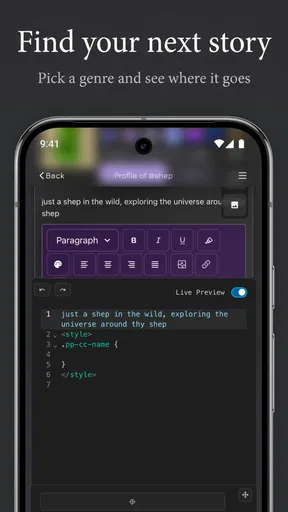
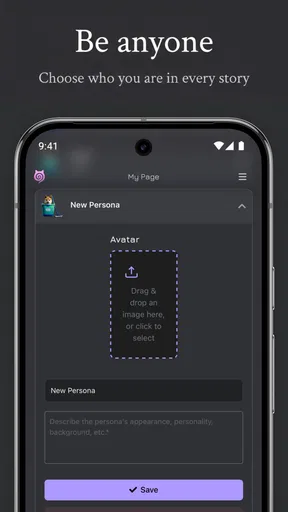
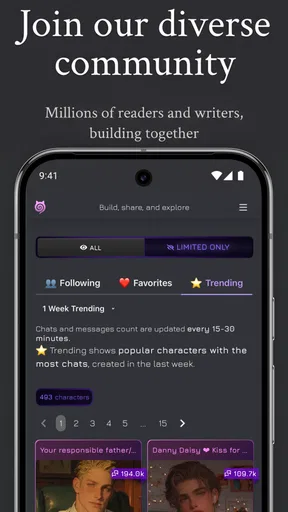
 Analysis by AppCompare
What makes Janitor: Interactive Stories worth considering is also what makes it an uneven fit: it asks me to help create the reading experience. I can steer a character exchange toward romance, fantasy, or fanfiction, but I cannot expect every turn to feel like a carefully revised page in a novel. I see it as a creative companion for readers who enjoy improvising, not as a replacement for finished books.
It works best when I bring a small intention
A useful way to start is to decide what I want from a session before I begin: a tense first meeting, a reconciliation, or a scene where trust is tested. That simple intention gives my replies direction without forcing a whole plot into place. If the exchange starts drifting, I can return to the goal in character rather than trying to repair every detail at once.
I also find it helps to keep a brief mental note of the scene’s key facts: who knows what, what each character wants, and what has just changed. That is especially useful when an interaction stretches across several turns. It gives me a natural way to reinforce continuity in my next response, while avoiding the awkward feeling of stopping the story to issue a list of corrections.
I see Janitor: Interactive Stories as a reading app for people who want more than a finished chapter. Its appeal is the chance to take part in a story as it unfolds, steering conversations and shaping the direction rather than simply turning pages. That makes it a very different kind of book app: less suited to quiet, linear reading and more suited to readers who enjoy improvisation, character-driven scenes, and the occasional unexpected detour.
Janitor is a free Books & Reference app from janitorai, with a mature 17+ rating. It has an average rating of 4.2 from around 19,000 ratings, and has passed 1 million installs. Those numbers suggest a substantial audience, but they do not guarantee that every story will suit every reader. My recommendation depends less on how much someone reads and more on whether they enjoy actively shaping what happens next.
Reading by taking part
I find the most useful way to judge Janitor is to ask whether I’m in the mood to contribute, not just read. Its appeal depends on that small shift: I bring a direction, respond to what happens, and accept that the scene may change along the way. That makes it a better fit for curious, hands-on reading than for a fixed daily reading routine.
Where the interactive format works best
The strongest idea here is that a story can feel like a conversation instead of a fixed text. In a conventional ebook, a character’s choices are already settled by the author. In an interactive AI story, the reader can respond, introduce a new direction, or decide what their character wants. Romance, fantasy, and fanfiction are natural fits for that approach because readers often come to those genres for chemistry, imagined worlds, and time with familiar kinds of characters.
Worth Reading Before You Choose

Flipboard Shows What News Apps Must Do Beyond the Feed

Switching to Android Auto Means Rethinking Your Driving Routine

Google Calendar Makes a Crowded Week Easier to Manage

Ludo King Makes the Most of the Minutes Between Plans

Baby Panda World Brings Quick Play to Modern Phones, but Its Game Library Feels Busy

ESPN’s Live Game View Makes Following Close Games Easier
I would approach it as a creative reading space, not as a replacement for a carefully edited novel. The pleasure is in the exchange: a prompt sets up a situation, the reader answers in character, and the next passage builds on that contribution. When the interaction lands, even a small choice can make a scene feel personal. A tentative reply can turn a meeting into a slow-burn romance; a bold one can send the same setup in a completely different direction.
That freedom comes with a useful trade-off. You are not only consuming a story; you are helping produce it. If you like filling in gaps and nudging a scene toward your preferred mood, that can be absorbing. If you want a polished plot with deliberate pacing and a guaranteed ending, a conventional ebook or a branching game with authored routes will probably be more satisfying.
A practical way to get better exchanges
One detail that matters in this kind of app is how you write your replies. Very short answers can keep a conversation moving, but they also leave the story with little direction. I get more value from adding a clear action, a bit of emotion, and one concrete detail about what my character wants. That gives the next turn something specific to respond to without trying to control every part of the scene.
For example, instead of replying only “I agree,” I might say that my character agrees but remains uneasy about the plan, then ask what the other person is hiding. This creates a conversational hook and gives the story a reason to develop. It is a small technique, but it helps distinguish interactive reading from tapping through generic exchanges. It also gives me a way to recover when a scene starts to feel flat: introduce a conflict, clarify the relationship, or ask a question that changes the stakes.
A second helpful habit is to treat each session as a scene rather than expecting to build an entire novel in one sitting. I might start with a simple goal—reconcile after an argument, investigate a strange arrival, or test whether two characters trust each other—and stop once that moment reaches a natural pause. This makes the experience easier to pick up again and keeps the story from wandering simply because the conversation has no destination.
Where the freedom can become friction
The same open-endedness that makes the app engaging can also make it uneven. An AI-led exchange is not the same as reading a script that has been edited for consistency, rhythm, and character development. A story may surprise me in a good way, but it may also lose the thread or respond in a way that does not match the tone I had in mind. Readers who are sensitive to continuity will need patience, and sometimes a willingness to steer the scene back on course.
That is not a minor distinction. In a traditional book, I can trust the author to manage pacing and payoffs. Here, I need to do some of that work myself. If a character’s motivation shifts, I can remind the conversation what has happened or restate what matters, but doing so interrupts the illusion. For me, that is an acceptable cost when I want collaborative play; it is frustrating when I am looking for a seamless reading session.
There is also a difference between an interesting premise and an engaging long-term story. A compelling opening can draw me in, but the interaction still depends on my willingness to contribute and shape the direction. Anyone expecting a complete, carefully plotted fanfiction experience without having to participate may find the format less rewarding than its premise suggests.
Good fit for short breaks and personal prompts
A realistic use case is a short evening break when I want something more imaginative than scrolling through ordinary reading material, but do not want to commit to a full novel. I can choose a scenario, write a few responses, and leave after a satisfying exchange. The app is also a reasonable fit for someone who enjoys writing but does not always have a full plot ready: responding to a character can provide a starting point, while the reader’s choices supply the momentum.
It can suit romance readers who want to explore different emotional dynamics, fantasy fans who enjoy building scenes around a setting, and fanfiction readers who like interactive character encounters. It may also work for people who use role-play as a low-pressure creative exercise. The value is not only in finding a finished story; it is in seeing how a premise changes when you make a different choice or give a character a different reaction.
On the other hand, I would not recommend it as a first choice for someone who wants a distraction-free library of edited books, a dependable offline reading routine, or a story that never departs from a carefully planned arc. If reading is mainly about following an author’s finished work, an ebook reader or a conventional fiction platform is a better match. If interaction itself is the draw, Janitor has a clearer reason to exist.
How it compares with familiar reading options
Compared with standard ebook apps, Janitor puts participation ahead of browsing and reading a finished text. Ebook apps are better for collecting books, keeping a steady place in a long novel, and enjoying prose without needing to supply the next move. Janitor is better when I want to answer a character and see the scene react. These are not interchangeable experiences, even though both involve reading on a phone.
Compared with visual novels and branching narrative games, this format feels less like selecting from a prepared menu and more like writing a response in my own words. That can offer a more personal sense of control, but it also means the result may be less tightly authored. A branching game is usually the safer choice when I want polished routes, carefully paced scenes, and a clear sense of progression. Janitor is the more appealing choice when I want room to improvise and do not mind the story changing shape as I go.
That comparison helps explain who will enjoy it most: readers who regard a little unpredictability as part of the fun. Someone who measures a story mainly by its structure may prefer a book. Someone who measures it by how much they can influence the characters may prefer this app.
Age, cost, and what to expect
The mature 17+ content rating is important when deciding whether this is appropriate for a reader or for a shared device. I would not treat it as a general-audience book app, particularly for younger teens. The themes available in interactive romance and role-play can make the experience quite different from a standard children’s reading library, so the age guidance deserves attention before someone starts exploring.
The app is free to download, which makes it easy to try without paying up front. It also offers in-app purchases at $12.99 per item, so I would check what a purchase covers and whether it suits my intended use before spending. A sensible approach is to begin with the free experience, see whether the conversational format holds my interest, and only then consider whether an optional purchase adds enough value for me.
The current version is 2.6.0, and the app supports Android 7.0 and later. For someone on an older phone, that minimum requirement is worth checking before making plans around it. The practical point is simple: the basic concept is easy to understand, but whether it becomes part of a reading routine depends on the fit between the device, the mature audience rating, and the user’s appetite for interactive storytelling.
My verdict: a distinctive reader’s choice, not a universal one
I would recommend Janitor to a friend who enjoys character-focused fiction and wants to influence the scene rather than merely observe it. Its strongest quality is the way it turns reading into a small act of collaborative writing. With a clear prompt, a defined scene goal, and replies that give characters something meaningful to react to, it can make a spare few minutes feel creatively engaging.
I would steer a friend elsewhere if they wanted a reliable, finished novel, tightly controlled continuity, or a conventional reading library. The open format asks the reader to do more work, and the experience can feel inconsistent when the story drifts. For readers who welcome that uncertainty, though, the trade-off is worthwhile: this is best enjoyed as interactive role-play with a literary spark, not as a substitute for a polished book.
Janitor: Interactive Stories earns its place for a particular kind of reader: curious, imaginative, and happy to help write the next beat. I find that a more useful way to judge it than expecting every exchange to behave like a finished chapter. If shaping romance, fantasy, or fanfiction scenes sounds more appealing than passively following them, it is worth trying; if the pleasure of reading for you lies in an author’s complete control, another format will feel more natural.
A better match for creative readers than routine readers
One question I would ask before installing is whether I want to read when I have only a few spare minutes, or whether I want a story that can hold my attention without my input. Janitor suits the first situation when I have enough energy to reply and experiment. It is less convenient when I am tired, commuting, or simply hoping to open a book and continue where an author left off. The interaction is the point, but it is also a commitment of attention.
For a practical routine, I would keep a scene focused and end it with a clear pause: a decision made, a question left unanswered, or a character’s arrival. That gives me an easy opening when I return, without expecting the exchange to remember every subtle detail perfectly. I would also avoid making a single conversation carry several unrelated plotlines; keeping the emotional stakes narrow gives the story fewer chances to lose its direction.
My bottom line remains that this app is most rewarding when I treat it as a prompt for collaborative fiction rather than a ready-made library. If I want a story to surprise me and am willing to redirect it when needed, the format offers something an ebook cannot. If I want a quiet, dependable text with a completed arc, choosing a conventional book is not settling for less—it is choosing the tool that better fits that mood.
Pros
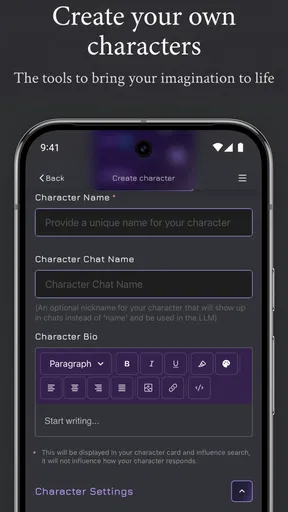
- Create and customize characters
- including their appearance and personality.
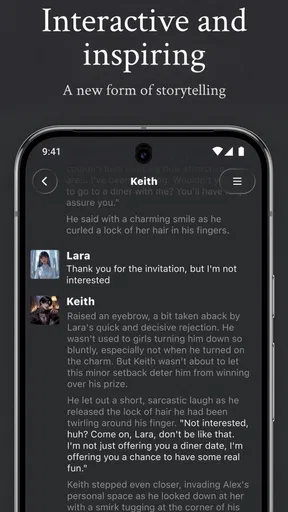
- Chat-based scenes make stories quick and easy to follow on mobile.
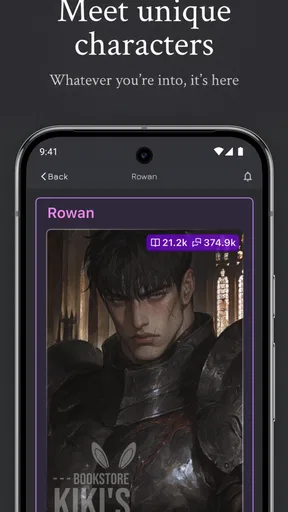
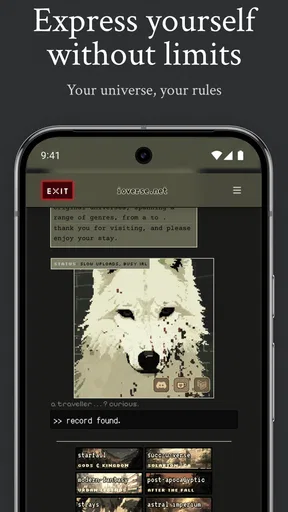
- A wide range of user-created characters and story scenarios is available.
- You can shape conversations by choosing how your character responds.
- The role-play format leaves room for improvisation and creative storytelling.
Cons
- Story quality and consistency vary considerably between characters.
- Some conversations may repeat themselves or lose track of earlier details.
- User-created content can include mature or otherwise unsuitable themes.
- Finding a particular character or scenario may take some browsing.
- Access to features or usage may depend on account limits or paid options.
FAQs for Janitor: Interactive Stories
What is Janitor: Interactive Stories?
Janitor: Interactive Stories is a mobile app centered on reading and creating interactive, chat-style stories. Its appeal comes from letting users follow fictional conversations and, depending on the available features, shape how a story develops through choices or prompts. The exact experience can vary by version and account, so check the app’s current description and screenshots to confirm what content and tools are offered before downloading.
Is Janitor: Interactive Stories free to download and use?
The app may be available to download without an upfront charge, but that does not necessarily mean every feature or item is free. Some apps offer optional purchases, subscriptions, or other paid extras, and availability can differ between platforms or regions. Review the store listing for current pricing and in-app purchase details, and check any payment terms carefully before starting a trial or making a purchase.
Does Janitor: Interactive Stories use AI or let users create their own stories?
Interactive story apps may include conversational characters, user-created content, or AI-generated replies, but the precise tools available in Janitor: Interactive Stories can change over time. Consult the latest app listing and in-app settings to see whether creation features are included, whether an account is required, and what limits apply. If responses are generated automatically, treat them as entertainment rather than verified information.
Is Janitor: Interactive Stories suitable for children?
Do not assume the app is appropriate for children just because it presents stories in a chat format. User-generated or conversational content can vary, and mature themes may be present depending on the app’s policies and available controls. Check the age rating, content notices, and parental guidance information on your device’s app store before installing it for a younger user, and supervise use where appropriate.
What should I check about privacy and internet access before downloading?
Interactive story apps commonly need an internet connection to load content or provide conversational features, and some may collect account or usage data. Before installing Janitor: Interactive Stories, review its store-page privacy disclosures and the developer’s privacy policy for details about permissions, data handling, and deletion options. Use a strong, unique password if registration is required, and avoid sharing personal or sensitive information in chats.


